
Mastering Health with S.M.A.R.T. Goals
Mastering Your Health with S.M.A.R.T. Goals
Setting goals is a vital step when trying to improve your health. Goals give us direction and keep us motivated. However, not all goals are created equal. To really make progress, it's important to set S.M.A.R.T. goals. But what does S.M.A.R.T. mean, and how can it help you achieve better health?
What Are S.M.A.R.T. Goals?
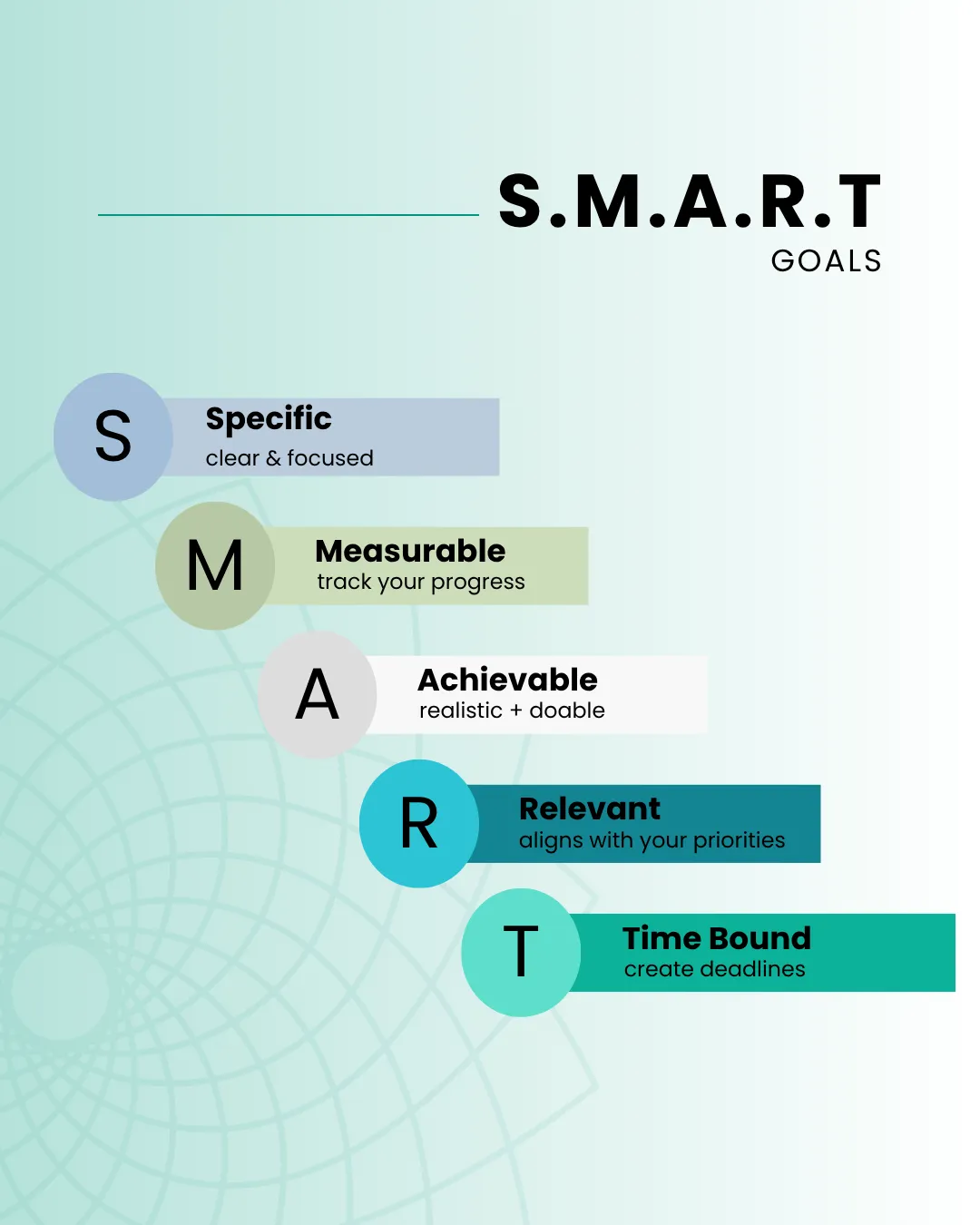
The S.M.A.R.T. goal framework stands for goals that are Specific, Measurable, Achievable, Relevant, and Time-bound. This method helps you create clear targets, track your progress, and stay dedicated to your health objectives.
1. Specific: Clear and Focused
Your goal should be clear and specific. Without a specific goal, you might lose focus and direction. A specific goal answers questions like:
- What do I want to achieve?
- Why is this goal important?
- Who is involved?
- Where do I want it to happen?
- Which resources or limits are involved?
Example: Instead of saying, "I want to be healthier", a specific goal could be, "I want to walk 30 minutes every day for better cardiovascular health."
2. Measurable: Track Your Progress
Measuring your progress is key to staying on track. A measurable goal includes details on how you will know when you’ve achieved it. Here’s how you can do that:
- Make your goal measurable with specific numbers or criteria.
- Ask how much, how often, or how many.
Example: "I want to drink 8 glasses of water per day." This goal is specific and allows you to track it easily.
3. Achievable: Realistic and Doable
Your goal should be realistic and attainable. While it’s great to aim high, your goal should be possible to accomplish. Consider your limitations and resources.
- Reflect on what you need to do to make your goal reachable.
- Consider any constraints such as time, money, or skills.
Example: Instead of planning to run a marathon right away, start with a goal to run a 5K.
4. Relevant: Aligns with Your Priorities
Your goal should matter to you and align with other relevant goals. Does it fit with your lifestyle and long-term plans?
- Ensure your goal aligns with your values and needs.
- Consider why this goal is significant now.
Example: If better health means more energy for family activities, a goal focusing on health-related activities is relevant.
5. Time-bound: Set Deadlines
Every goal needs a target date so you have a clear focus to work towards. A deadline helps prioritize and creates a sense of urgency.
- Decide when you’d like to reach your goal.
- Ask yourself when you will start, check your progress, and plan milestones.
Example: "I want to lose 5 pounds in the next two months."
Benefits of S.M.A.R.T. Goals
The S.M.A.R.T. method is helpful for setting goals that are clear and reachable. It keeps you motivated and focused, increases your chances of success, and makes you accountable. By achieving your goals, you can experience greater satisfaction and improvements in your health.
Getting Started with S.M.A.R.T. Goals
Here's a simple plan to start setting your own S.M.A.R.T. goals:
- Write down your health goal.
- Break it down using the S.M.A.R.T. criteria.
- Check your progress regularly and adjust as needed.
- Celebrate when you achieve your goal!
Remember, the journey to better health is a marathon, not a sprint. Set your goals wisely, and enjoy the progress you make along the way. With S.M.A.R.T. goals, you're setting yourself up for success.