
How to Manage Stress and Avoid Suffering
How to Manage Stress and Avoid Suffering
In today's fast-paced world, stress seems to be a part of everyday life. Whether it's school, work, or personal issues, feeling stressed is natural. But does stress have to lead to suffering? The answer is no, and here's why.
Understanding Stress vs. Suffering
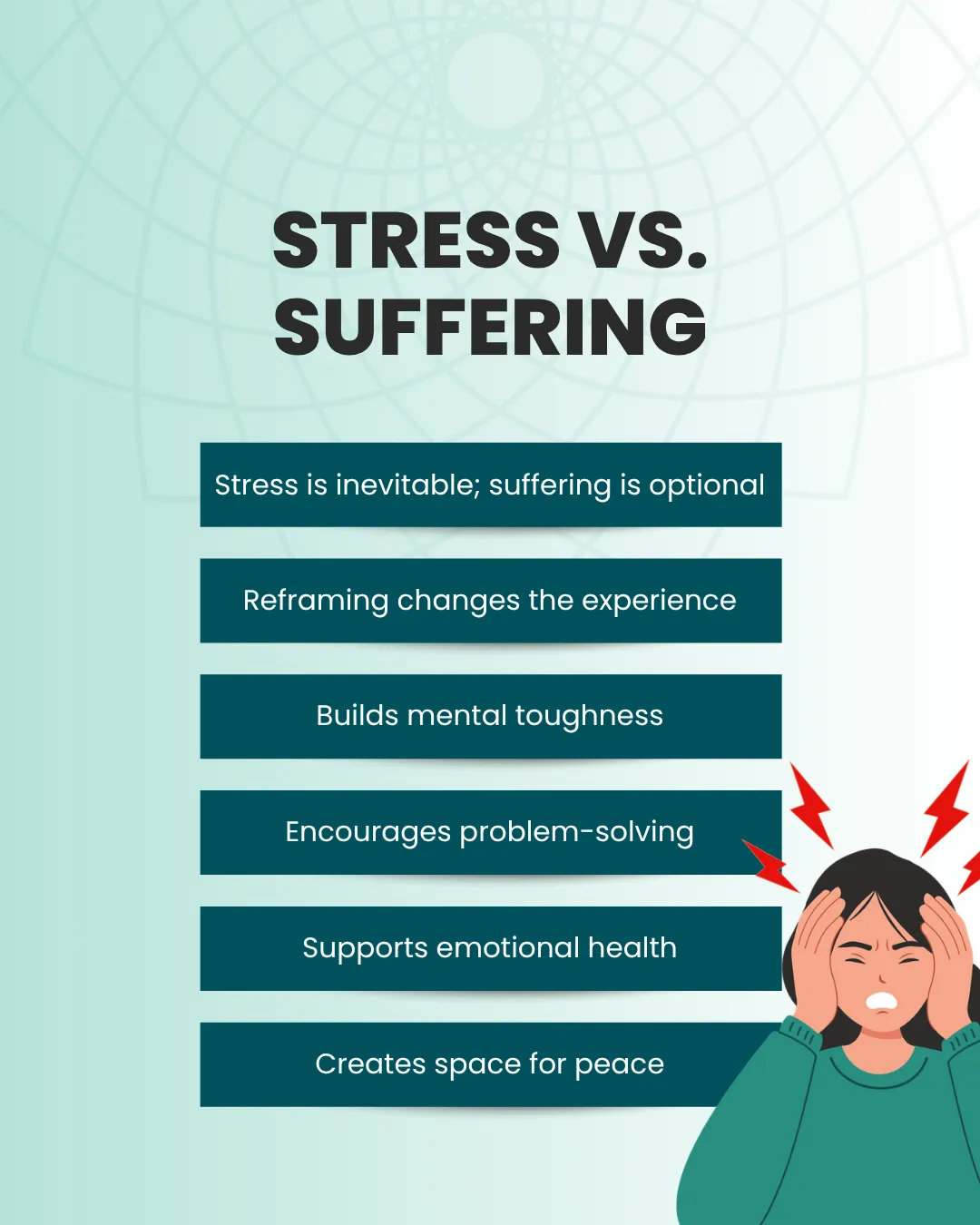
Stress is inevitable; it's something everyone experiences. It can come from different sources, like exams, job interviews, or even family gatherings. That's okay. It's how we handle stress that makes the difference. On the other hand, suffering is how stress makes us feel. It's not inevitable.
Suffering happens when we focus on the negative aspects of stress. It's a choice we can avoid by changing our mindset and approach.
Reframing the Experience
Reframing is about changing how we see a situation. If stress is inevitable, how we experience it is up to us. Here's how reframing stress can help:
- Builds Mental Toughness: Facing challenges and learning from them can make us stronger. It teaches us how to cope better next time.
- Encourages Problem-Solving: Instead of panicking, focus on finding solutions to the problems causing you stress.
- Supports Emotional Health: By reframing stress, you avoid negative feelings that can affect your mood.
- Creates Space for Peace: Changing your mindset allows you to find peace, even in stressful times.
Actionable Steps to Manage Stress
Knowing that reframing can help, how do we start? Here are some easy steps to manage stress and avoid suffering:
- Breathe Deeply: Take a deep breath, hold it for a few seconds, and slowly exhale. This simple step can help calm your mind.
- Focus on What You Can Control: Don't waste energy on things you can't change. Focus on what you can do at the moment.
- Break Tasks into Steps: Large tasks can feel overwhelming. Break them down into smaller, manageable steps.
- Talk About It: Share your feelings with a friend or family member. Sometimes talking it out can provide clarity and relief.
- Practice Gratitude: Think of things you're thankful for. This shift in focus can lighten your mood.
The Role of Emotional Health
Our emotions play a significant role in how we experience stress. Maintaining emotional health can help manage stress better. Here’s how:
- Recognize Emotions: Understanding what you're feeling is the first step to dealing with it.
- Stay Active: Physical activities, like walking or yoga, can boost mood and relieve stress.
- Mindful Meditation: Take a few minutes each day to meditate and focus on the present. It helps clear your mind.
Finding Peace amid Chaos
While stress will pop up in life, choosing how to face it makes all the difference. By reframing our perception of stress, we can build resilience, find solutions, and foster emotional well-being. This shift can transform stress from an enemy into a challenge we can overcome.
It's important to remember that peace isn't the absence of stress but the mastery of rethinking stress. This mindset creates room for positivity and growth, helping to avoid unnecessary suffering.
In closing, managing stress is a blend of understanding, reframing, and acting mindfully. It requires patience and practice, but the benefits to our mental and emotional health are substantial. Let’s learn to manage stress positively to lead healthier, happier lives.