
Understanding Emotions as Valuable Data
Understanding Emotions as Data
Emotions are a vital part of our lives, but sometimes they can feel overwhelming or even misleading. However, when we understand them correctly, emotions can serve as valuable data. They provide signals, helping us navigate our daily experiences, relationships, and personal growth. This blog will explore the concept of emotions as data, helping you learn how to interpret them effectively.
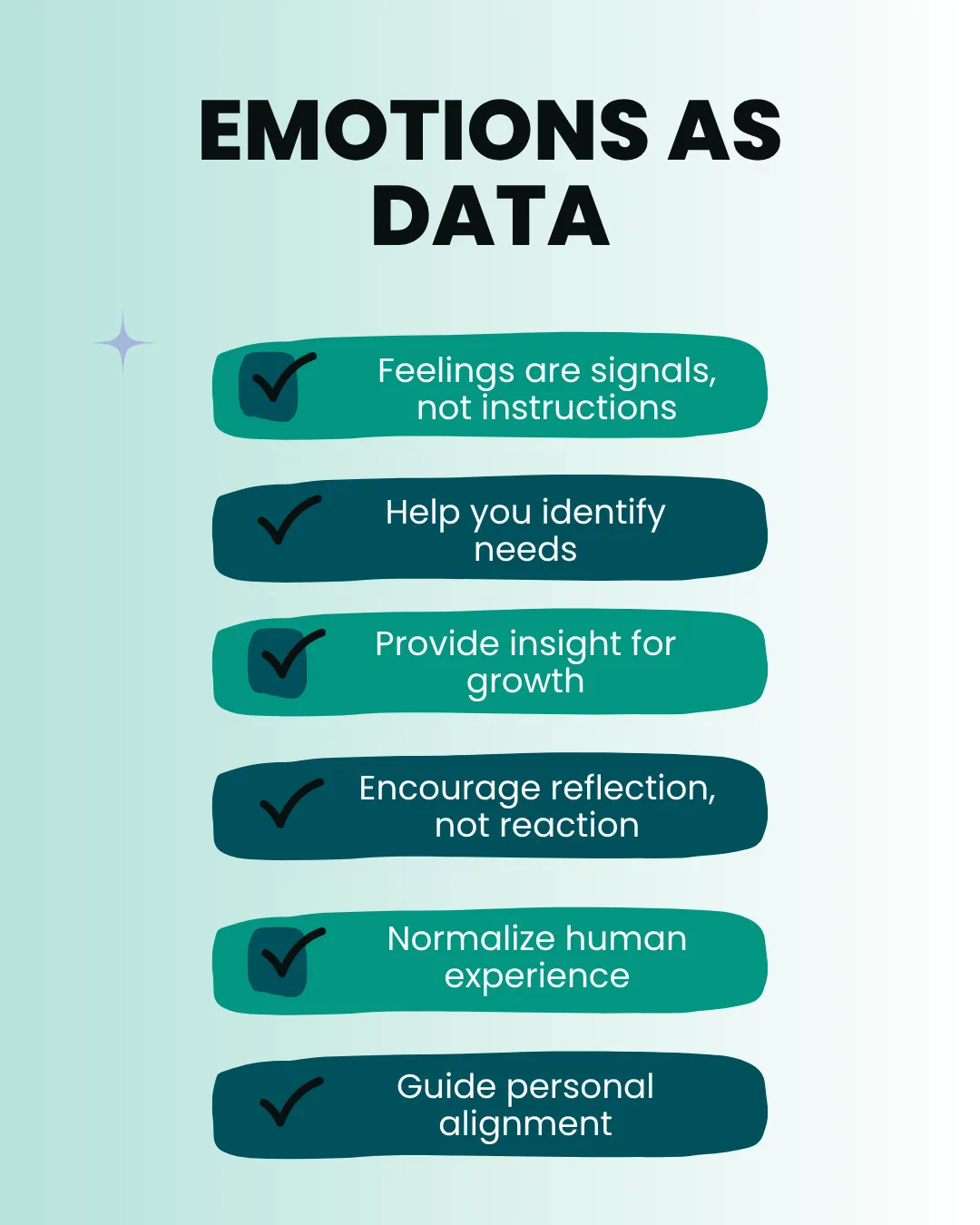
Feelings as Signals, Not Instructions
One key concept is that feelings are signals, not instructions. This means that while emotions tell us something important is happening, they don't dictate how we should react. By viewing emotions as signals, they become a tool for self-reflection rather than a command to act.
- Example: Feeling anxious before a test may signal that you care about your performance, but it doesn't mean you're destined to fail.
Identifying Needs Through Emotions
Emotions are also a guide to understanding our own needs. Experiencing certain feelings often points to something we require in our lives or relationships. By identifying these needs, we can take proactive steps to address them.
- Example: Loneliness might indicate the need for more connection with others.
Providing Insight for Growth
Our emotions offer insight for personal growth. By exploring why we feel a certain way, we can uncover deeper truths about ourselves and make meaningful changes.
- Example: Feeling jealous can be an opportunity to explore what insecurities or desires are present in your life.
Encouraging Reflection, Not Reaction
Instead of reacting immediately to emotions, it's beneficial to pause and reflect. This way, emotions become a tool for reflection, allowing us more control over our actions. This pause can lead to more reasoned and thoughtful decisions.
- Example: When angry, taking a moment to breathe and think before responding often leads to better outcomes.
Normalizing the Human Experience
Emotions are a normal part of the human experience. They connect us to ourselves and others. By acknowledging emotions as normal, we reduce their power to control us. Embracing emotions helps build empathy and connection.
- Tip: Share your feelings with trusted friends or family to see how common certain experiences are.
Guiding Personal Alignment
Finally, emotions help guide us to personal alignment. Feeling discomfort or satisfaction often guides us towards change or affirmation. By listening to these emotional cues, we can align our actions with our true values and goals.
- Example: If work leaves you feeling drained, it may be time to consider a career change that aligns with your passion.
Conclusion
In conclusion, emotions as data provide a framework for understanding our innermost signals. By viewing emotions in this way, we not only gain insight but also empower ourselves to make informed, intentional decisions that align with our true selves. Embrace your emotions, listen to their signals, and use them to guide your every step.