
Create a Balanced Plate for Optimal Health
Creating a Balanced Plate for Optimal Health
Many people wonder how to maintain a balanced diet without feeling overwhelmed. The solution is simpler than you think. Creating a balanced plate is the key to enjoying diverse foods while ensuring you receive the necessary nutrients. Let’s explore how to build a balanced plate step by step.
What is a Balanced Plate?
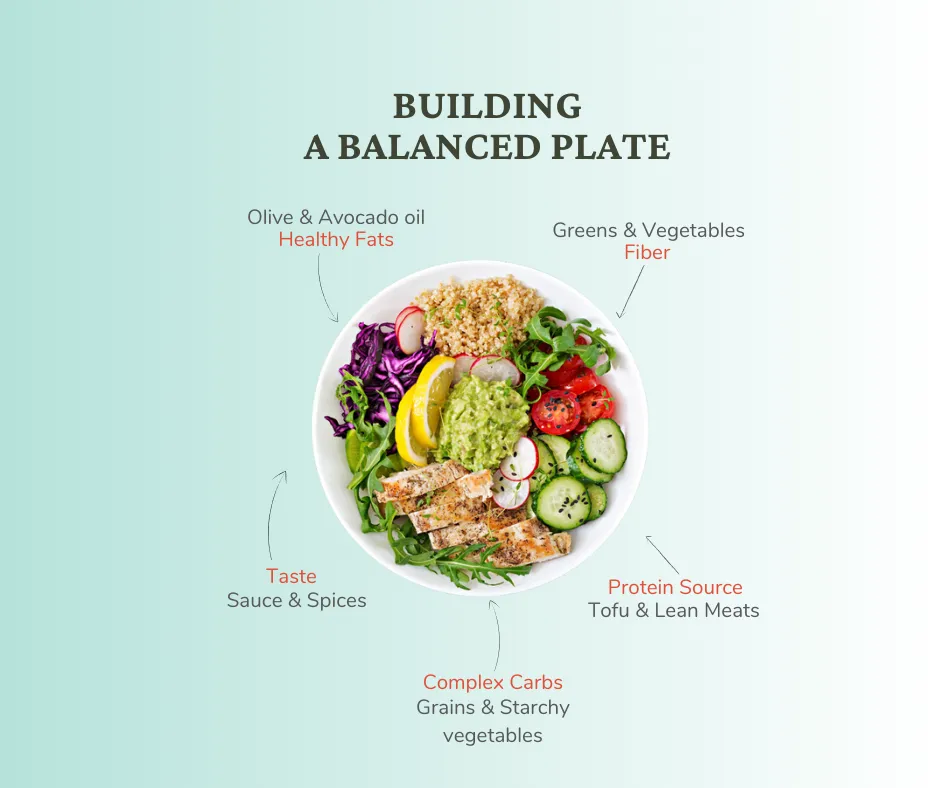
A balanced plate includes the right mixture of food groups to provide essential nutrients. A healthy plate typically consists of:
- Healthy Fats
- Protein Sources
- Complex Carbohydrates
- Greens and Vegetables
- Delicious Sauces and Spices
1. Healthy Fats
Healthy fats are crucial for the body. They protect organs, support cell growth, and help absorb nutrients.
Sources of Healthy Fats:
- Olive oil
- Avocado oil
Incorporating these fats makes dishes tasty while supporting your health.
2. Protein Sources
Proteins are the building blocks of the body. They help in building and repairing tissues, making them vital for everyone.
Top Protein Sources:
- Tofu
- Lean meats like chicken or turkey
Selecting lean proteins ensures you maintain muscle strength and energy.
3. Complex Carbohydrates
Complex carbs are broken down slowly, providing lasting energy.
Sources of Complex Carbs:
- Whole grains
- Starchy vegetables such as sweet potatoes
These foods are vital for maintaining stable blood sugar levels.
4. Greens & Vegetables
Greens and vegetables provide fiber, vitamins, and antioxidants. They support digestion and overall health.
Suggested Greens/Vegetables:
- Leafy greens such as spinach and kale
- Colorful veggies like tomatoes and cucumbers
Filling half your plate with these ensures you're getting diverse nutrients needed daily.
5. Taste with Sauce & Spices
While nutrients are important, flavors bring joy to meals.
Enhance Flavors with:
- Herbs like parsley or basil
- Spices such as cumin or paprika
Appropriate spices transform your meal without added calories, making healthy eating enjoyable.
Building Your Plate
Start by measuring appropriate portions. Here’s a simple way to visualize it:
- Fill half your plate with vegetables and greens.
- Add a quarter for lean protein sources.
- Reserve the remaining quarter for complex carbs.
- Add healthy fats and spices as needed for flavor.
Benefits of a Balanced Plate
- Improved Energy Levels: Balanced meals keep energy stable throughout the day.
- Weight Management: Proper portions prevent overeating and help maintain a healthy weight.
- Better Digestion: Fiber from vegetables aids in digestion.
- Increased Vitality: A diverse intake of nutrients results in overall better health.
Conclusion
Building a balanced plate is an effective way to improve your diet and health. By focusing on various food groups and their portions, you take a significant step toward a healthier you. Remember, each meal is an opportunity to nourish your body, so make each plate a balanced one!